
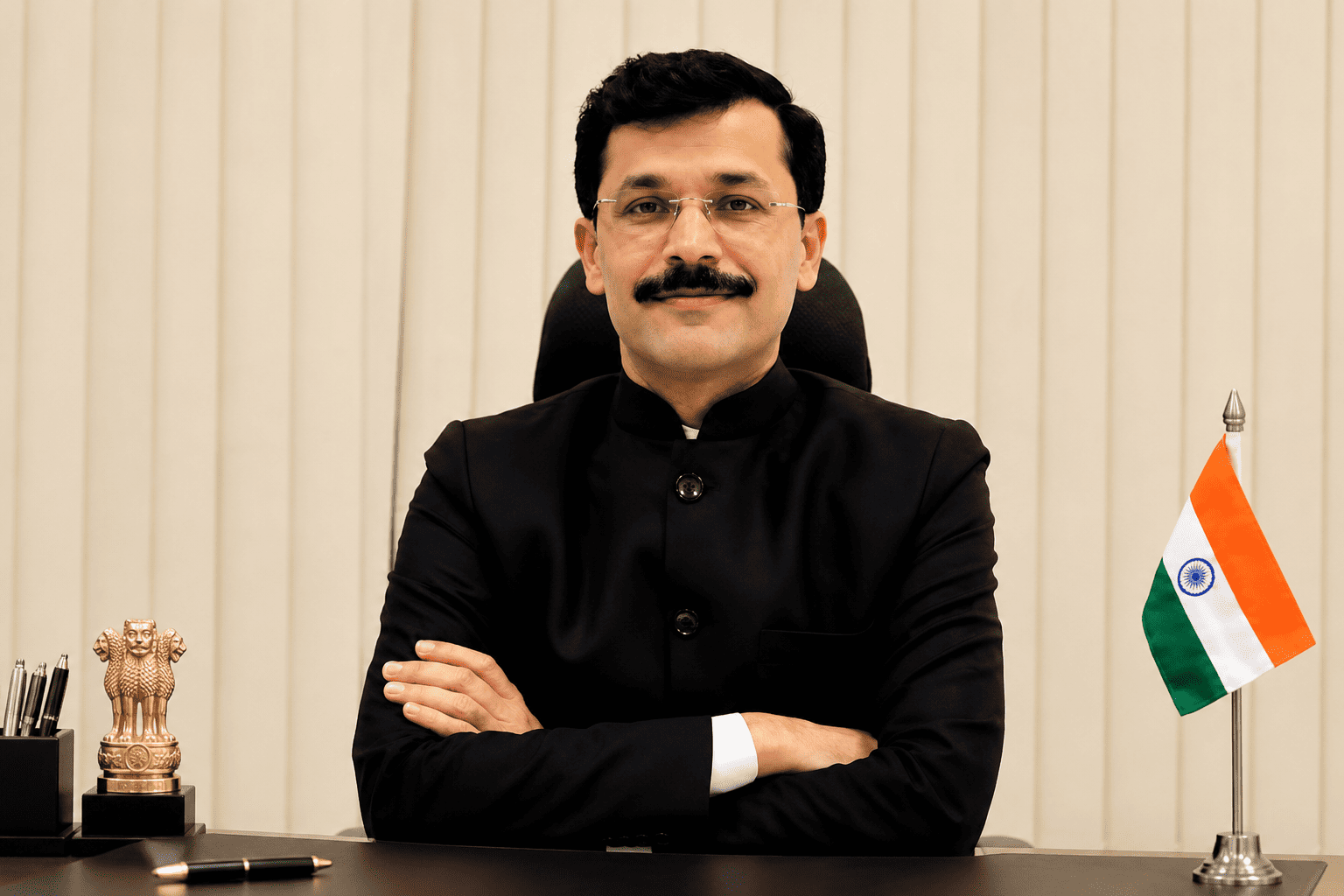
Few names in India’s civil services spark as much conversation as Tukaram Mundhe. Over a two-decade career in the Maharashtra cadre, this 2005-batch IAS officer has become a symbol of uncompromising governance admired by citizens, feared by vested interests, and shuffled from post to post more often than almost anyone else in the bureaucracy. His story is not just about administrative reform. It is a masterclass in resilience, discipline, and staying true to a personal mission even when the system keeps moving the ground beneath your feet the kind of everyday motivation Motivation N You has built its community around.
From a Farming Village to the UPSC
Tukaram Mundhe’s beginnings were humble in every sense. Born on 3 June 1975 in Tadsonna, a small village in Maharashtra’s Beed district, he grew up in a farming household that struggled with debt and unreliable electricity. As a boy, he often woke around 2 a.m. to water the family’s crops whenever power returned. He studied in Marathi-medium schools before shifting to English for competitive exams, eventually earning a graduate degree in History and a master’s in Political Science from Dr Babasaheb Ambedkar Marathwada University, Aurangabad.
His path to the civil services wasn’t instant either. He first cleared the state-level MPSC exam in 2001, on his fourth attempt, before going on to secure an all-India rank in the low twenties in the UPSC Civil Services Examination and joining the IAS in 2005, allotted to his home state cadre. That early struggle — repeated attempts, financial hardship, and sheer persistence — set the tone for everything that followed.
A Career Defined by Movement
Mundhe began his career in August 2005 as a supernumerary assistant collector in Solapur. What followed was one of the most restless postings maps in Indian bureaucracy district administration in Jalna and Solapur, municipal commissionerships in Navi Mumbai, Nashik and Nagpur, a stint running Pune’s public transport utility PMPML, and later senior roles spanning health services, disability welfare, disaster management, and food and drug regulation. By 2026, he had been transferred roughly 25 times in 21 years of service, averaging less than a year in any single posting far short of the three-year tenure norm typically expected for IAS officers.
Each posting followed a familiar rhythm: Mundhe would move fast, enforce rules without exception, and generate visible results — and then face political friction that often ended in reassignment. As District Collector of Solapur from late 2014, he made water conservation a defining priority in a drought-prone region, cutting dependence on water tankers and cracking down on illegal sand mining. That work later earned him the Best Collector Award for 2015–16 and recognition as a “Waterman of Maharashtra.”
The Navi Mumbai and Nashik Storms
If one posting cemented his public image, it was his stint as Municipal Commissioner of Navi Mumbai from May 2016 to March 2017. Within months, he had taken on illegal construction, tightened civic discipline, and gone after officials accused of negligence — a style that earned strong public goodwill but equally strong political pushback, including a no-confidence motion. Sent to Nashik soon after, he applied the same rules-first playbook against encroachment and financial indiscipline, and again faced organized political resistance.
At PMPML, the Pune transport corporation, Mundhe tackled chronic inefficiency using technology automatic vehicle location and fare-collection systems that, according to his own account, cut late bus departures from around an hour to just five to seven minutes, while sharply reducing cancelled trips. It was effective, data-driven administration. It was also, again, disruptive enough to unions and stakeholders that his exit was contentious, with critics calling him autocratic even as supporters insisted on his integrity.
Facing Real Danger
Mundhe’s insistence on enforcement hasn’t come without personal risk. Early in his career, after confronting the sand mafia, he received death threats, and in Solapur there was reportedly an attempt on his life. He returned to work the very next day. Over the years he has also dealt with an FIR linked to lockdown-enforcement disputes and a harassment complaint — controversies that trail any officer who repeatedly chooses confrontation over compromise.
Leadership Lessons from the “Singham” of Maharashtra
Popularly nicknamed “Singham” for his no-nonsense style, Mundhe’s approach to leadership offers lessons well beyond government offices:
- Discipline over comfort — he has repeatedly prioritized rule-based decisions over the easier, politically convenient path.
- Consistency across chaos — despite 25 transfers, his working method has barely changed from department to department.
- Measurable goals — from bus punctuality to drought relief, he has leaned on data and visible targets rather than vague intentions.
- Resilience as identity — he has described his transfers not as setbacks but as fresh opportunities to serve a different part of the state.
That last point resonates with anyone building long-term habits around goal-setting and self-discipline. If Mundhe’s story motivates you to bring more structure into your own routine, a goal tracker planner India buy is a simple place to start, paired with a designer office desk setup that keeps your priorities visible. A daily reminder on your desk like a Daily Affirmation Motivation Mug can reinforce the same mindset Mundhe has carried through 25 postings: show up, do the work, and let results speak.
Currently at the Helm of Maharashtra FDA
Since taking charge as Commissioner of the Maharashtra Food and Drug Administration in May 2026, Tukaram Mundhe has led one of the state’s biggest enforcement drives against food adulteration and unsafe products. His mission statement: “Safe Food, Safe Drugs, Safe Maharashtra.”
Major Enforcement Actions:
Overall Inspection & Enforcement Stats:
- Inspected over 3,000 food establishments restaurants, dairies, cloud kitchens and quick commerce houses; suspended 165 licenses and issued 764 improvement notices
- Conducted 1,131 inspections across the state in less than two months, or more than 20 a day on average
Milk Adulteration Crackdown (Biggest Operation):
- Conducted 360 raids, registered 235 FIRs, arrested 350 alleged adulterators, and sealed 274 illegal units operating across the state
- Exposed a massive adulteration racket where over 2.3 crore litres of synthetic milk valued at around Rs 9.2 crore were manufactured; authorities arrested 13 people, registered cases against 26 accused, and seized adulterating chemicals worth Rs 1.48 crore
- Identified that detergent powder, palm oil and low-grade chemical powder were mixed into synthetic milk; around 10 litres of synthetic milk were mixed with every 100 litres of pure milk
Temple Prasad (Shirdi Operation – June 2026):
- Seized and destroyed around 700 kilograms of adulterated and low-quality peda near the Sai Baba temple complex after samples revealed the prasad did not meet required quality standards
Tobacco & Banned Products:
- Registered 19 FIRs, arrested 22 people and seized banned gutkha and pan masala worth Rs 20.29 lakh
Online Food Delivery & Quick Commerce:
- Inspected 86 food establishments operating through online delivery platforms on August 13; one business was ordered to stop operations immediately, while 60 establishments were served improvement notices; also suspended 14 food business licences with immediate effect for violations including poor hygiene, improper food storage temperatures and expired food items
Consumer Directive Actions:
- Hotels, restaurants and roadside eateries have been directed to provide customers with free drinking water, while hospitals have been warned against compelling patients to purchase medicines from affiliated pharmacies
Scrutiny of Major Brands:
- Seized expired Frooti and Appy Fizz worth Rs 99,970 and suspended Parle Agro linked warehouse licence
Public Health Priority:
- Issued directives to strengthen food safety compliance across the entire milk ecosystem, bringing dairies, transporters, distributors, wholesalers and retailers under stricter regulatory scrutiny
- Made it clear that safeguarding the health of the public remains the number one priority of the FDA with “no lenience” on public health
Judicial Scrutiny:
- The Bombay High Court has stayed or reversed some FDA licence suspensions, including cases involving restaurants, dairies, milk vendors and a hotel, questioning whether immediate closure is proportionate in every case
“The Mundhe Effect”:
- Restaurant and club kitchens across Mumbai are reportedly stepping up cleaning and maintenance, with establishments hiring pest-control contractors, steam-cleaning kitchens, scrubbing accumulated grease and dirt and reorganising food storage
Key Quote: “We will continue our action on establishments not following Food Safety and Standards Authority of India (FSSAI) norms. Citizens also should be aware about the norms and keep a close watch on hygiene standards,” Mundhe said.
Conclusion
Tukaram Mundhe’s journey from a farming village in Beed to one of Maharashtra’s most talked-about bureaucrats is a reminder that integrity in public service often comes at a personal cost, but rarely goes unnoticed. Whether or not the transfers ever slow down, his career stands as proof that consistent, principled action creates impact that outlasts any single posting.